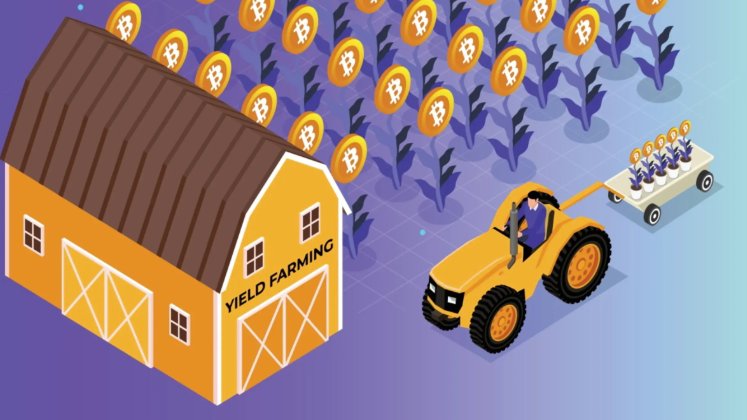

Yield farming represents a significant advancement in decentralized finance (DeFi). It allows users to leverage their cryptocurrency holdings for potential returns. By depositing assets into liquidity pools, participants facilitate trading and lending activities on decentralized platforms. However, this process is not without risks. Understanding the mechanics and implications of yield farming is crucial for those considering this strategy. The intricacies of its operation and the potential pitfalls warrant a closer examination.
What Is Yield Farming?
Yield farming represents a sophisticated financial strategy within the decentralized finance (DeFi) ecosystem, where participants utilize their cryptocurrency holdings to generate additional returns.
This approach often involves contributing assets to liquidity pools, which facilitate trading and lending. In return, users receive reward tokens, incentivizing their participation.
Consequently, yield farming empowers individuals to capitalize on their assets, fostering financial autonomy in the digital landscape.
How Yield Farming Works
In the realm of decentralized finance, the mechanics of yield farming involve several critical processes that optimize the use of cryptocurrency assets.
Participants contribute their assets to liquidity pools, enabling decentralized exchanges to function efficiently. In return, they receive rewards through various reward mechanisms, which may include tokens or a share of transaction fees, enhancing their earning potential while fostering a robust financial ecosystem.
Potential Risks of Yield Farming
Evaluating the potential risks associated with yield farming reveals several factors that could significantly impact investors.
Impermanent loss can occur when the value of deposited assets fluctuates, leading to reduced returns.
Additionally, smart contract vulnerabilities pose a serious threat, as flaws in the code can be exploited, resulting in financial losses.
Understanding these risks is crucial for informed participation in yield farming.
See also: Digital Banking and Mobile Payment Technologies
Benefits of Yield Farming
While many investors are drawn to traditional financial instruments, the innovative landscape of decentralized finance (DeFi) offers compelling advantages through yield farming.
Primarily, it enables participants to generate passive income by lending or staking assets. Furthermore, liquidity rewards incentivize users to provide capital to decentralized platforms, fostering enhanced market efficiency.
Ultimately, yield farming empowers investors to maximize returns while embracing financial autonomy.
Conclusion
In conclusion, yield farming presents an innovative avenue for maximizing cryptocurrency returns through liquidity provision. However, potential participants must tread carefully, as the landscape is fraught with risks such as impermanent loss and smart contract vulnerabilities. Understanding these factors is crucial before diving in. Ultimately, while yield farming can be a golden opportunity for passive income, investors should always remember that not all that glitters is gold, necessitating thorough research and risk assessment.


 By
By